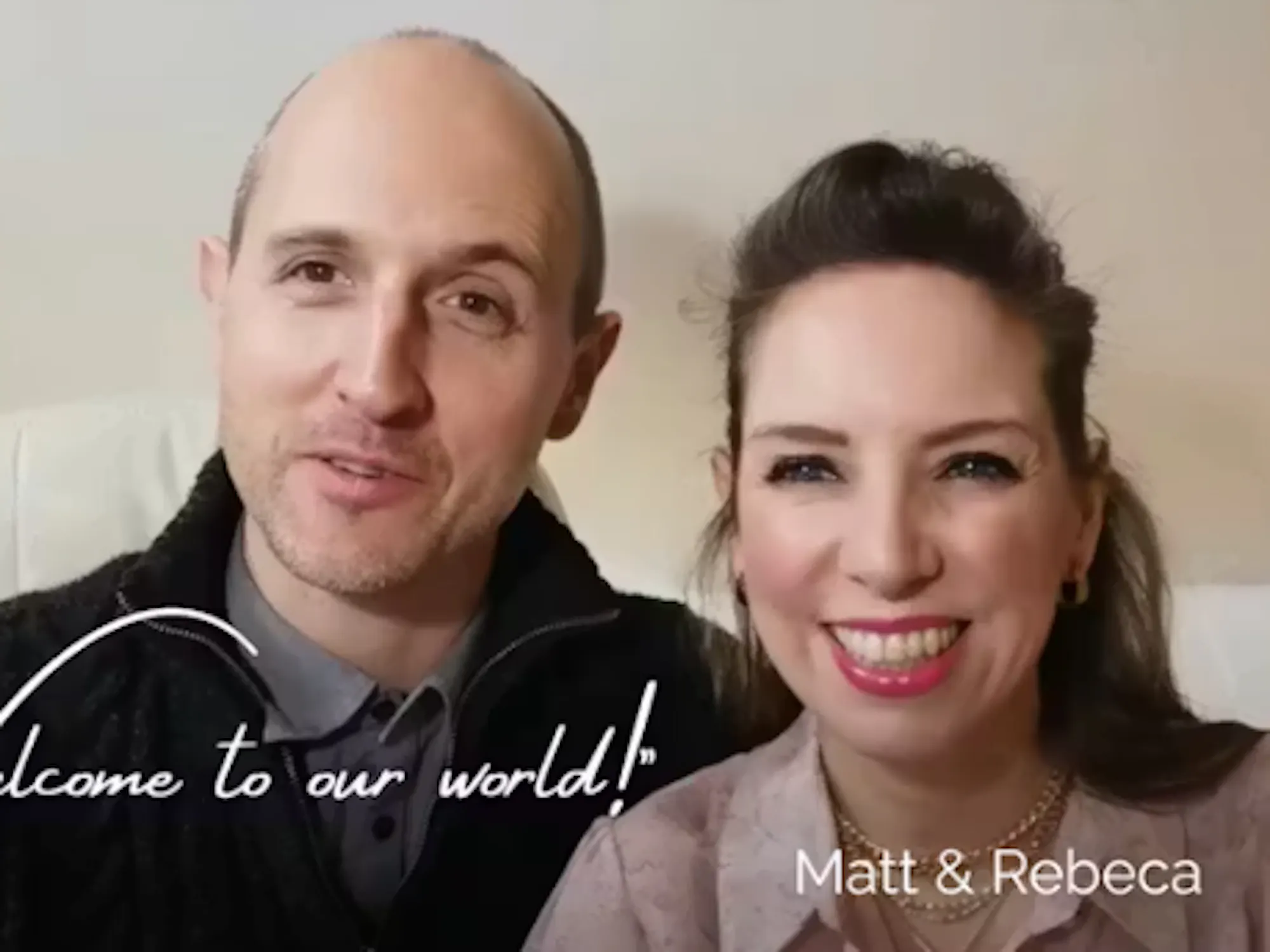
Beyond Attraction: Navigating the Real Stages of Love with Thomas M. Jones
What happens when the initial spark fades? Discover the five stages of love with Thomas M. Jones, explore emotional patterns and learn how to build a more conscious, fulfilling relationship.

✨ The Essence of this Article
Love often begins with attraction, chemistry and possibility. But what happens when the initial excitement fades and the reality of building a relationship begins?
In this conversation with psychotherapist, author and creator of The Paradox Process, Thomas M. Jones, we explore five stages of romantic relationships, from magnetic attraction to the deeper work of conscious partnership. We uncover how emotional patterns, limiting beliefs and unspoken expectations can shape our experience of love.
At Aligned with Love, we offer an approach that goes beyond traditional relationship counselling London services. Through our A.L.I.G.N.E.D. Methodology, Systemic Intervention and exclusive VIP On-Site options, we help individuals and couples understand their patterns, reconnect with their deeper intentions and create meaningful, lasting change.
Because real love is not simply about finding the right person. It is about learning how to build the right relationship together.
Why Are We So Powerfully Attracted to Certain People?
Have you ever met someone and felt an almost inexplicable connection?
Perhaps the conversation flowed effortlessly. Perhaps there was an immediate physical attraction, an emotional familiarity or even a sense that you had known this person before.
In our conversation with Thomas M. Jones, we explore how attraction operates on multiple levels: physical, emotional and spiritual.
We are drawn to people for reasons that are not always immediately apparent. Sometimes their qualities complement our own. Sometimes they awaken something we have been longing to experience. And sometimes they activate unresolved emotional patterns that we may not yet recognise.
Thomas explores how we metaphorically "plug into" one another through these different dimensions of connection.
Yet attraction, however powerful, is only the beginning.
The deeper question is not simply, "Why am I attracted to this person?"
It is, "What are we capable of creating together once the initial attraction has settled?"
This distinction can transform how we approach relationship therapy and the search for meaningful partnership.
What Are the Five Stages of Love in a Relationship?
Although every relationship follows its own unique path, we can understand the journey of love through five broad stages.
These are not rigid rules or a guaranteed sequence. Instead, they provide a helpful framework for recognising how connection evolves and where opportunities for growth may emerge.
Stage 1: Attraction — The Magic of Possibility
In the beginning, everything can feel extraordinary.
We are captivated by chemistry, excitement and the promise of what the relationship could become. We naturally focus on the qualities we admire, often overlooking differences or potential challenges.
This stage can feel magical, even transformative.
However, the intensity of early attraction can also create an illusion of perfection.
We may fall in love not only with the person standing before us, but with the possibilities we imagine they represent.
Stage 2: Discovery — Seeing Beyond the Illusion
As the relationship develops, we begin to see our partner more fully.
Their habits, vulnerabilities, emotional responses and differences become increasingly visible.
We may discover that they do not communicate as we expected, approach intimacy in the same way or share every value we initially assumed.
This is where the relationship begins to move beyond fantasy and into reality.
Rather than seeing these discoveries as signs that something has gone wrong, we can recognise them as invitations to develop genuine understanding.
The question becomes: Can I love this person as they are, rather than as I imagined them to be?
Stage 3: Disappointment — When Expectations Meet Reality
At some point, disappointment may enter the relationship.
Perhaps one partner wants greater commitment while the other is uncertain about the future. Perhaps emotional needs are not being met, or familiar disagreements begin to repeat.
Judgement can gradually replace curiosity.
We might think:
- "Why can't they understand what I need?"
- "They weren't like this when we first met."
- "If they really loved me, they would change."
- "Perhaps I've chosen the wrong person."
Thomas explores how disappointment can arise when we become attached to our partner's potential rather than accepting their present reality.
This stage can be uncomfortable, but it also offers an opportunity to examine our expectations, emotional triggers and underlying beliefs.
Through couples therapy and deeper personal development work, partners can learn to recognise these patterns rather than allowing them to define the relationship.
Stage 4: Conscious Choice — Creating an 'Us'
One of the most significant shifts in a relationship occurs when we move from asking, "What am I getting from this?"to "What are we creating together?"
This is the beginning of conscious partnership.
Instead of expecting our partner to fulfil every need or maintain the excitement of the beginning, we start to explore the relationship as something we actively co-create.
What values do we share?
What does commitment mean to each of us?
How do we want to communicate, grow and support one another?
And perhaps most importantly, are we genuinely moving towards the same vision?
Not every couple will discover that their long-term intentions align. But having these conversations openly can bring clarity, whether the relationship continues or not.
Stage 5: Growth — Evolving Together or Separately
Relationships do not exist in isolation from the rest of our lives.
We change through experience, challenge, ambition, loss and personal discovery.
Sometimes two people evolve in ways that bring them closer together. At other times, their priorities, values or visions for the future begin to diverge.
Neither outcome automatically means that the relationship has failed.
What matters is whether both people can approach that evolution with honesty, awareness and mutual respect.
A lasting relationship is not one in which neither person changes.
It is one in which both partners remain willing to discover who they are becoming and whether they can continue building a meaningful life together.
Why Does the Spark Sometimes Fade After the Beginning of a Relationship?
Modern culture often celebrates the excitement of falling in love.
We are surrounded by stories of instant chemistry, effortless romance and the belief that the right relationship should always feel extraordinary.
But this can create an unrealistic expectation.
The intense excitement of a new relationship is not necessarily designed to remain unchanged forever.
As familiarity grows, novelty may give way to security, companionship and deeper intimacy.
For some people, this transition can feel disappointing.
They may interpret the absence of constant excitement as evidence that love has disappeared.
Thomas highlights the danger of becoming attached to the emotional high of the beginning, repeatedly seeking the next exhilarating connection rather than exploring what lies beyond it.
This pattern can become a cycle of excitement, disappointment and starting again.
Yet a quieter, more grounded form of love can be every bit as meaningful.
The challenge is learning to recognise the difference between a relationship that has genuinely become unhealthy or incompatible and one that is simply entering a more mature stage.
Why Do We Keep Repeating the Same Relationship Patterns?
Have you ever noticed that different relationships seem to bring up remarkably similar challenges?
Perhaps you repeatedly feel abandoned, misunderstood, controlled or emotionally disconnected.
Perhaps you find yourself attracted to unavailable partners, avoiding difficult conversations or becoming anxious when intimacy deepens.
These patterns may be influenced by earlier experiences, family dynamics, beliefs about love and the ways we have learned to protect ourselves emotionally.
Thomas M. Jones developed The Paradox Process, an approach designed to help people work with negative thoughts and emotional experiences in a different way.
His work invites us to consider how difficult emotions can become opportunities for self-understanding and personal growth.
Rather than treating every uncomfortable feeling as something to escape, we can become curious about what it may reveal.
In relationships, this awareness can be particularly valuable.
When we understand our own emotional responses, we may become less likely to project old experiences onto our current partner.
This is also why effective relationship coaching should look beyond surface-level disagreements to explore the deeper patterns influencing how two people connect.
How Can We Stop Judging Our Partner and Start Understanding Them?
Disappointment often begins with an expectation that has not been met.
We may believe our partner should communicate differently, demonstrate affection in a particular way or automatically understand what makes us feel loved.
When they do not, frustration can turn into judgement.
Over time, we may stop seeing the person in front of us and instead focus on everything we believe they should become.
There is an important difference between supporting someone's growth and trying to change who they fundamentally are.
Healthy love requires both acceptance and discernment.
Acceptance does not mean tolerating harmful behaviour, abandoning personal boundaries or ignoring genuine incompatibility.
It means recognising the reality of another person rather than relating exclusively to an imagined future version of them.
By replacing judgement with curiosity, couples can begin asking more constructive questions:
What is happening beneath this disagreement?
What does each of us need to feel understood?
Are we responding to one another, or reacting to something from our past?
These questions create space for deeper connection without requiring either partner to sacrifice their identity.
How Do We Know Whether We Want the Same Future?
One of the most challenging relationship discoveries is realising that two people may be experiencing the same connection very differently.
One partner may be imagining marriage, children or a shared home.
The other may be enjoying the present without considering a long-term commitment.
Neither person is necessarily wrong for having different intentions.
The difficulty arises when those intentions remain unspoken, misunderstood or deliberately avoided.
Chemistry alone cannot resolve a fundamental difference in life direction.
A conscious relationship requires conversations about values, commitment, expectations and the future.
These conversations are not always comfortable, particularly when we fear that honesty might threaten the connection.
But clarity is an act of respect, both for ourselves and for the person we love.
For couples seeking marriage counselling London services, exploring shared goals and underlying expectations can be an important part of understanding whether and how the relationship can move forward.
Why Might Traditional Relationship Counselling Not Be Enough for Us?
Many couples come to relationship support after months or even years of repeating the same arguments.
They may have tried communicating differently, reading relationship books or attending traditional counselling, yet still feel caught in familiar emotional cycles.
Traditional counselling can provide valuable understanding and support. However, talking about a problem does not always create the change a couple is hoping to experience.
Aligned with Love is not a traditional counselling service.
Our work combines practical relationship guidance with deeper transformational approaches designed to explore the beliefs, emotional responses and relational patterns that may be maintaining the difficulty.
While many therapists specialise in one primary therapeutic tool, our practitioners have trained across some of the most advanced approaches to personal and relational change.
Our integrated approach is designed to create opportunities for deep, lasting transformation rather than relying on conversation alone.
For those who have previously struggled to make progress through traditional counselling, our Google Testimonialsand Video Testimonials offer an opportunity to hear directly from clients about their experiences with Aligned with Love.
We believe that understanding why a problem exists is valuable.
Learning how to move beyond it is equally important.
How Does the A.L.I.G.N.E.D. Methodology Help Couples Create Lasting Change?
At Aligned with Love, our A.L.I.G.N.E.D. Methodology brings together complementary approaches to support meaningful personal and relationship transformation.
Rather than assuming every couple needs the same intervention, we consider the unique emotional, behavioural and systemic influences shaping their relationship.
Our integrated methodology draws upon:
Coaching: Helping individuals and couples gain clarity about their intentions, values, decisions and the relationship they wish to create.
Neuro-Linguistic Programming (NLP): Exploring habitual patterns of thinking, language and behaviour, with the aim of developing more constructive responses.
Hypnotherapy: Using guided therapeutic techniques to explore beliefs, emotional associations and internal responses that may be difficult to access through ordinary conversation.
Family Constellations: Examining family-system dynamics and inherited relational patterns that may influence how we experience intimacy, loyalty, conflict and belonging.
Together, these approaches provide different ways to explore the challenges that emerge in relationships.
The intention is not simply to help couples communicate more effectively, but to understand the deeper dynamics that may be influencing their connection.
Different approaches have different evidence bases, and no single methodology guarantees a particular outcome. Our focus is on tailoring the work to the needs and circumstances of each client.
What Is a Systemic Intervention and Could It Help Our Relationship?
Sometimes the challenges within a relationship are connected to dynamics that extend beyond the two people involved.
Family expectations, childhood experiences, inherited beliefs and long-established emotional roles can all influence how we relate to a partner.
Our Systemic Intervention approach explores these wider influences rather than viewing each disagreement as an isolated problem.
For example, a couple experiencing repeated conflict around emotional availability may discover that each partner has developed very different expectations of closeness and independence.
Understanding those differences can create opportunities to respond with greater awareness.
A systemic perspective asks not only, "What is going wrong between us?" but also, "What patterns are we participating in, and how might we begin to change them?"
This can be particularly relevant when couples feel that conventional communication techniques have not addressed the underlying issue.
Can We Access Relationship Support in London, Online or Privately at Home?
Every relationship is different, and so are the circumstances in which people seek support.
Some couples value meeting in person. Others require flexibility around demanding careers, international travel or family commitments.
At Aligned with Love, we support people seeking relationship counselling London and marriage counselling London alternatives, as well as individuals and couples living internationally.
Our services include online sessions for global clients, allowing couples to access support wherever they are based, subject to suitability and availability.
For clients who prefer a more private and immersive experience, we also offer VIP On-Site options, with travel to private residences by arrangement.
These bespoke experiences provide a discreet setting in which couples can dedicate focused time to exploring their relationship away from everyday distractions.
Whether you are navigating a significant turning point, working through recurring conflict or looking to deepen an already meaningful connection, the aim is to create an environment that supports honest reflection and purposeful change.
What Can We Learn from Thomas M. Jones About Building Conscious Love?
Our conversation with Thomas M. Jones reminds us that relationships are not simply experiences that happen to us.
They are also opportunities to understand ourselves.
Attraction may bring two people together, but conscious choices, emotional awareness and a willingness to grow influence what happens next.
When the illusion of perfection begins to fade, we have an opportunity to discover something more authentic.
We can examine our expectations rather than immediately blaming our partner.
We can recognise emotional patterns rather than unconsciously repeating them.
And we can explore whether the relationship we are creating genuinely reflects the values and future we want.
Sometimes this process strengthens a partnership.
Sometimes it brings the clarity needed to recognise that two people are moving in different directions.
Either way, conscious love begins with seeing ourselves, our partner and the relationship more clearly.
Discover more about Thomas M. Jones and The Paradox Process: https://courses.paradoxprocess.org/pages/about
Frequently Asked Questions
1. Is it normal for attraction to fade as a relationship develops?
Yes. The intensity of early attraction often changes as partners become more familiar with one another. This does not automatically mean that love has disappeared. For many couples, initial excitement gradually develops into emotional intimacy, trust and a more stable connection. However, persistent disconnection or incompatibility deserves attention rather than being dismissed as a normal stage.
2. How is Aligned with Love's Systemic Intervention different from traditional couples counselling?
Our Systemic Intervention approach looks beyond immediate disagreements to consider the wider family, emotional and relational patterns that may influence a couple's difficulties. Through our integrated A.L.I.G.N.E.D. Methodology, we draw upon coaching, NLP, hypnotherapy and Family Constellations to tailor support to each relationship. This differs from counselling approaches that focus primarily on discussion or a single therapeutic framework.
3. Can we arrange private VIP relationship support at our home?
Yes. Aligned with Love offers bespoke VIP On-Site experiences, including travel to private residences by arrangement. This option is designed for individuals and couples who value discretion, privacy and dedicated time to focus on their relationship. We also support London-based and international clients through online services.
Ready to Move Beyond Attraction and Create a More Conscious Relationship?
Whether you are questioning the future of your relationship, navigating repeated disagreements or simply wanting to deepen your connection, you do not have to work through everything alone.
At Aligned with Love, we help you explore what is happening beneath the surface and identify a more conscious way forward.
- Thomas M. Jones
- Marriage Counselling London
- relationship therapy
- Conscious Relationships
- couples therapy
- conscious relationships
- Relationship Coaching
- relationship advice
- Stages of Love
- relationship stages
- Relationship Counselling London
- Relationships
- five stages of love